
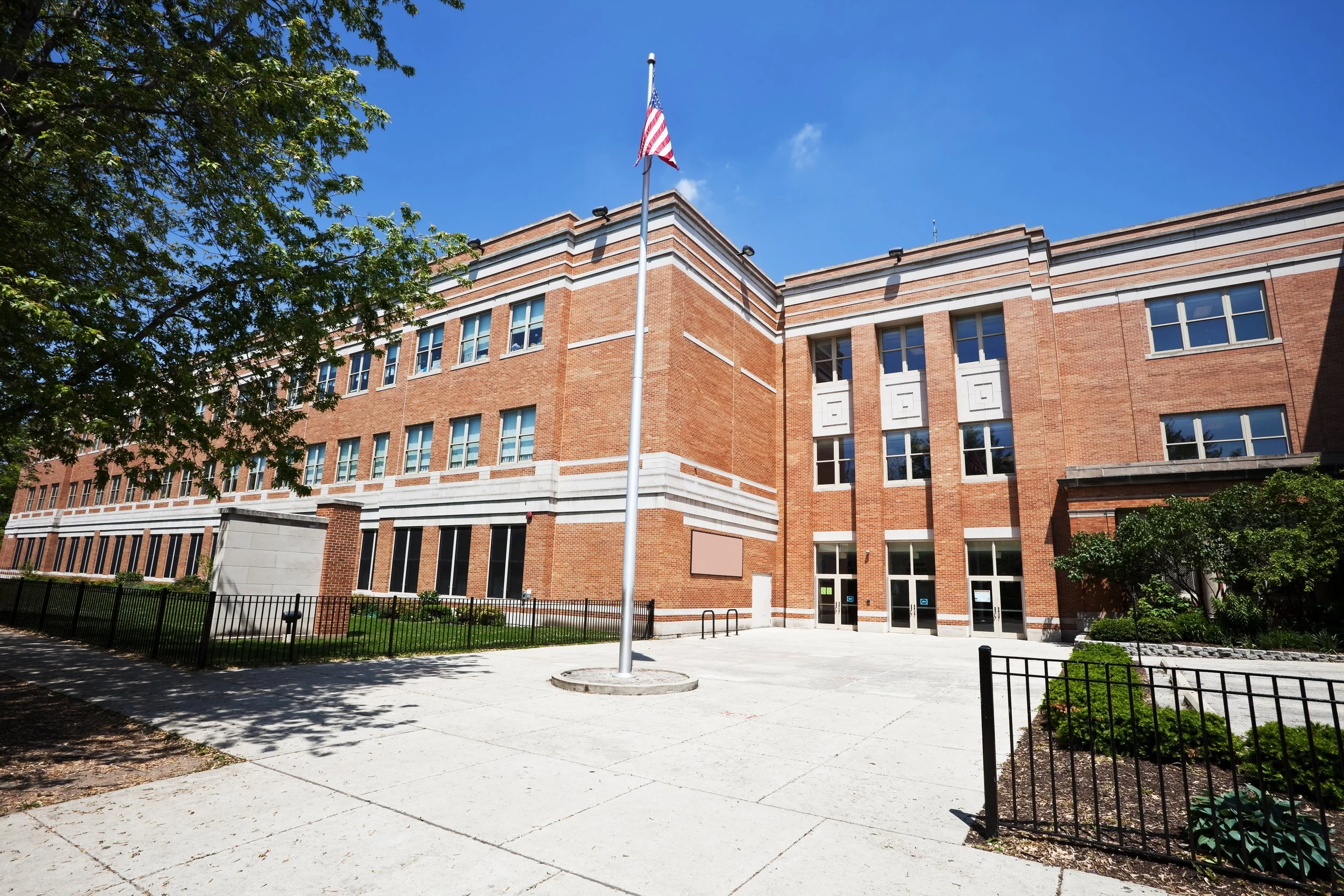
District Leaders & School Systems
District-ready consulting and coaching to design inclusive structures, align priorities, and implement evidence-based practices that improve outcomes for all students.

What we do
We help district leaders move from intentions to durable structures. Open Doors Education partners with school systems to assess readiness, align stakeholders, design inclusive decision-making and instructional systems, and support implementation with coaching and professional learning. The result is a shared future state, clear roles, practical tools, and structures that embed collaboration and equity into everyday practice.
Problems we solve
-
Where misalignment occurs
In the Chicago metro context, alignment fails when MTSS is treated as “intervention-only,” UDL guidance from CAST is optional at Tier 1, and IDEA/SDI is managed in a separate compliance lane—so classroom access, tier movement, and IEP delivery follow different rules.
Why it harms students and families
Office of Special Education Programs has clarified that RTI/MTSS strategies may not be used to delay or deny a full and individual evaluation for a child suspected of having a disability, yet “gating” still shows up operationally as slow referrals and late evaluations. Mobility compounds the impact because IDEA’s transfer provisions require comparable services and prompt record requests when a student enrolls with an existing IEP—so misalignment quickly becomes service interruption risk.
Legal and multilingual guardrails
Illinois State Board of Education (ISBE) requires a Home Language Survey and EL screening/placement, while IDEA requires nondiscriminatory, native-language evaluation practices and prohibits eligibility determinations driven by limited English proficiency—so referral routines must separate language acquisition from disability.
Funding realities
Evidence-Based Funding (EBF) is Illinois’ primary state funding formula shaping district operating capacity, while IDEA Part B is constrained by excess-cost and supplement-not-supplant requirements—so misallocation can underfund Tier 1 UDL design and over-rely on special education structures to solve general access problems.
-
Implementation drift is a widening gap between the MTSS–UDL–IDEA–SDI blueprint and everyday school routines.
Definition
Drift shows up when MTSS (defined by Chicago Public Schools as continuous with progress monitoring) loses discipline and UDL (CAST) is treated as optional rather than Tier 1 access design.
Causes
Common causes include policy-vs-practice gaps, siloed departments, chronic staffing shortages, inconsistent screening, data fragmentation, timeline delays, mobility/transfer gaps, and mismatched multilingual intake (Home Language Survey and EL screening), plus funding misallocation across Illinois State Board of Education Evidence-Based Funding and IDEA Part B excess-cost/supplement rules.
Impacts
Students can experience delayed evaluations even though Office of Special Education Programs at the U.S. Department of Education states RTI/MTSS cannot be used to delay or deny a full evaluation.
When SDI is not implemented as the content/methodology/delivery adaptations IDEA defines, and when transfers don’t trigger comparable services and prompt records, supports become inconsistent, placements can become more restrictive than necessary, and my compliance risk rises (Child Find and IEP implementation).
-
We see inequitable access when MTSS, UDL, IDEA, and SDI operate as separate tracks rather than one pathway, resulting in uneven grade-level participation and support delivery.
Definition
Inequitable access means a student’s opportunity to participate in general education and receive SDI (adapted content, methodology, or delivery to ensure access) varies by school, schedule, or staffing rather than entitlement.
Drivers
It is driven by policy–practice gaps, siloed departments, inconsistent screening and progress monitoring, timeline delays, multilingual/EL intersections (Home Language Survey -> EL screening), staffing shortages, mobility/transfer gaps, and fragmented data systems—especially when UDL drifts from CAST’s barrier-anticipating design.
It worsens when EBF/PTELL constraints destabilize Tier 1/2 infrastructure and we use IDEA Part B beyond excess-cost and supplement-not-supplant rules. Impacts
Operationally, families face delayed evaluations (contrary to Office of Special Education Programs guidance and Child Find), inappropriate restrictive placement when supplementary aids/services aren’t built, and service interruptions when transfer comparable services and record transmittal aren’t executed.

-
Inventory district goals, policies, and existing MTSS/UDL/IDEA artifacts.
Survey primary guidance from ISBE, OSEP/ED, CAST, and CPS.
Map stakeholder roles and design a governance and decision framework.
Draft phased implementation plan with staffing, funding, and fidelity checks.
Prepare deliverables, coaching model, and sustainability monitoring tools.
-
Inventory district goals, policies, and existing MTSS/UDL/IDEA artifacts.
Survey primary guidance from ISBE, OSEP/ED, CAST, and CPS.
Map stakeholder roles and design a governance and decision framework.
Draft phased implementation plan with staffing, funding, and fidelity checks.
Prepare deliverables, coaching model, and sustainability monitoring tools.
Project Phases
-
Collect Illinois and Chicago-area policy and funding guidance from ISBE and Chicago Public Schools.
Review federal IDEA and OSEP guidance on SDI, LRE, and child-find requirements.
Survey research and best-practice resources on MTSS and UDL implementation and outcomes.
Analyze common district obstacles including staffing, data systems, and funding constraints.
Synthesize findings into a district-ready system design with actionable recommendations.
-
Collect Illinois and Chicago-area policy and funding guidance from ISBE and Chicago Public Schools.
Review federal IDEA and OSEP guidance on SDI, LRE, and child-find requirements.
Survey research and best-practice resources on MTSS and UDL implementation and outcomes.
Analyze common district obstacles including staffing, data systems, and funding constraints.
Synthesize findings into a district-ready system design with actionable recommendations.
-
Long-term sustainability in an aligned MTSS–UDL–IDEA–SDI system comes from treating it as one operating model (not four initiatives): UDL sets the Tier 1 design standard, MTSS runs the district’s problem-solving and progress-monitoring engine, IDEA defines non-negotiable legal entitlements and timelines, and SDI must be explicitly described and delivered through IEP services. [1]
In the greater Chicago[2] metro context, sustainability is constrained by persistent staffing volatility and PTELL-limited local revenue growth, so I build the system to survive turnover: role clarity, standardized calendars and decision rules, auditable IEP→instruction routines, and a funding map that honors EBF flexibility and IDEA fiscal rules. [3]

“District transformation isn’t a program—it’s a design problem.”
Systems Design
An effective MTSS/UDL/IDEA/SDI system starts by treating these not as separate initiatives, but as one coherent inclusion architecture. MTSS should function as the district’s prevention and problem-solving framework for all students; UDL should shape core instruction so access is designed in from the start; IDEA should provide the legal guardrails for FAPE, LRE, evaluation, IEPs, and procedural protections; and SDI should define how instruction is adapted in content, methodology, or delivery to meet disability-related needs while maintaining access to the general curriculum. In Illinois, this design work should be built around current ISBE guidance, state special education requirements, and the district’s Evidence-Based Funding context, rather than around isolated programs or compliance checklists.
Implementation

Individual Coaching.
Group Coaching. Design Presentation. Framework Reviews.


Measurement: Results & Outcomes
“We align people, structures, and instructional strategies so inclusive practices don’t depend on heroic individuals.”
Sustainability
Sustaining the system can be done by anchoring Tier 1 to UDL as our “default design” for access: we proactively reduce barriers by offering multiple options aligned to Engagement, Representation, and Action & Expression, with the explicit goal of learner agency. [4] This matters because if Tier 1 is weak or inconsistent, we unintentionally shift “access work” into Tier 2/3 and special education—an expensive, inequitable pattern that is hard to reverse once normalized. [5]
We treat MTSS as the district’s continuous improvement engine—not a referral protocol. In Chicago Public Schools[6] (an instructive reference point for urban implementation), MTSS is explicitly described as a continuous process across tiers that uses performance data and progress monitoring to make evidence-based decisions about intervention intensity and duration. [7] I mirror that “continuous process” expectation districtwide because sustainability fails when MTSS becomes optional, personality-driven, or school-by-school. [7]
We design IDEA sustainability through building compliance into a district’s operations. The Office of Special Education Programs[8] has clarified that RTI/MTSS cannot be used to delay or deny a full evaluation, and that it is inconsistent to reject a referral and delay evaluation because a child has not participated in an RTI framework. [9] For sustained coherence, we encode this into my MTSS decision pathways as a non-negotiable guardrail to ensure evaluation access is never gated. [9]
We operationalize SDI as instruction. Federal regulation defines SDI as adapting content, methodology, or delivery to address disability-related needs and ensure access to the general curriculum.
Frequently Asked Questions
-
We start with a discovery call, to learn where you are and where you want to go.
-
Design ranges from 30-90 days based upon availability of leadership and involved parties.
-
Yes, we can operate at the district or individual school level based upon the specific needs.
-
Yes, coaching and consulting are key elements to implementing design and frameworks properly.
Let’s Work Together

If you're interested in working with us, complete the form with a few details about your project. We'll review your message and get back to you within the next business day.